
Why a Formal Cleanliness Report is Essential for Turbine and High-Pressure Pipelines

Why Cleanliness
Passing a hydrotest confirms that a high-pressure pipeline can withstand pressure. However, the real challenge lies in internal pipeline cleanliness. Even the smallest particle can cause pipeline erosion, valve blockage and costly downtime, putting the reliability of turbine systems at risk.
At ML Weld Engineering, we understand that pipeline cleanliness is just as critical as industrial welding quality, prefabrication and installation and a successful hydrotesting process. A clean pipeline reduces the risk of failures, ensures a reliable pipeline start-up and extends the lifespan of turbine and high-pressure pipeline systems.
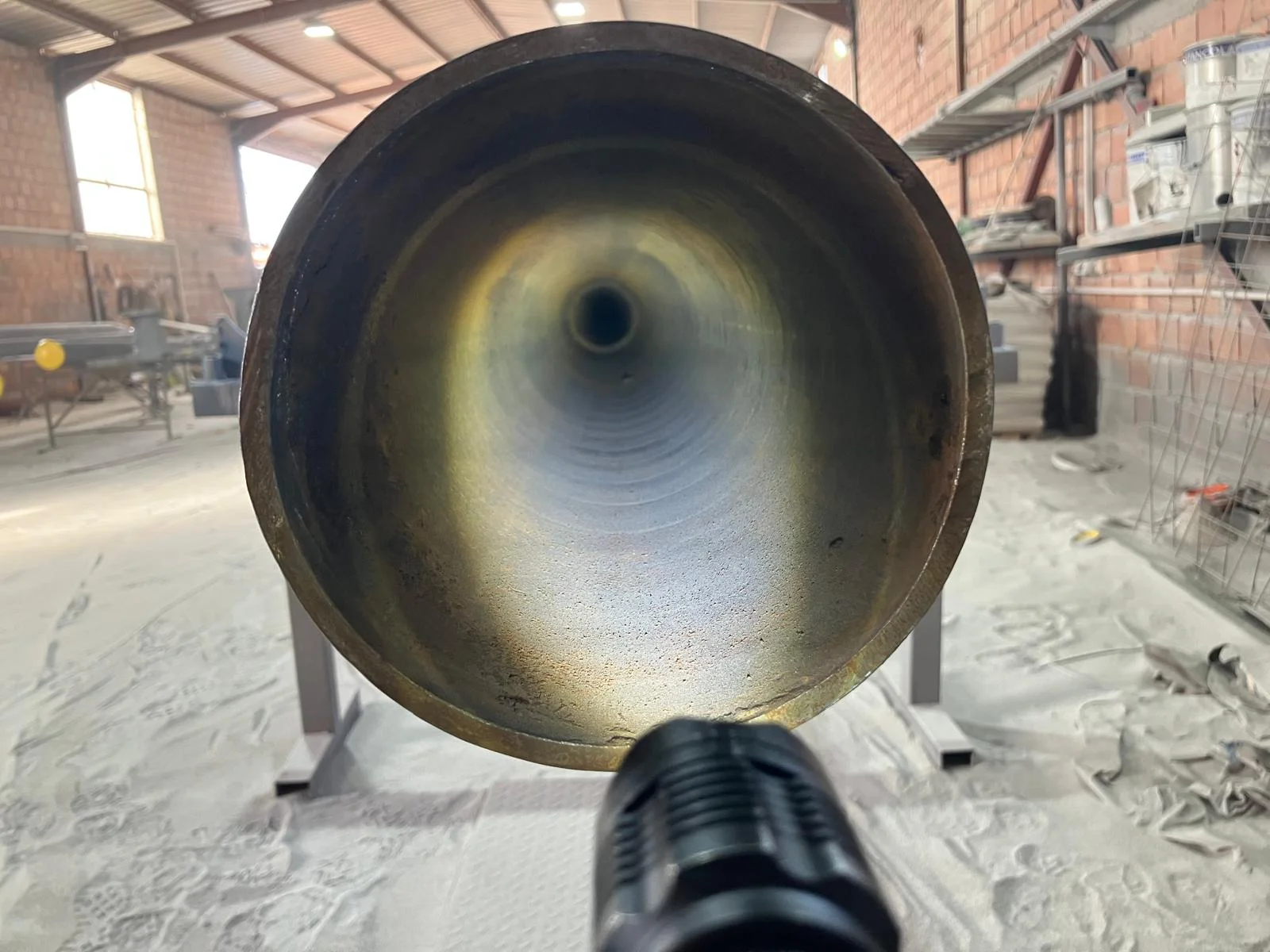
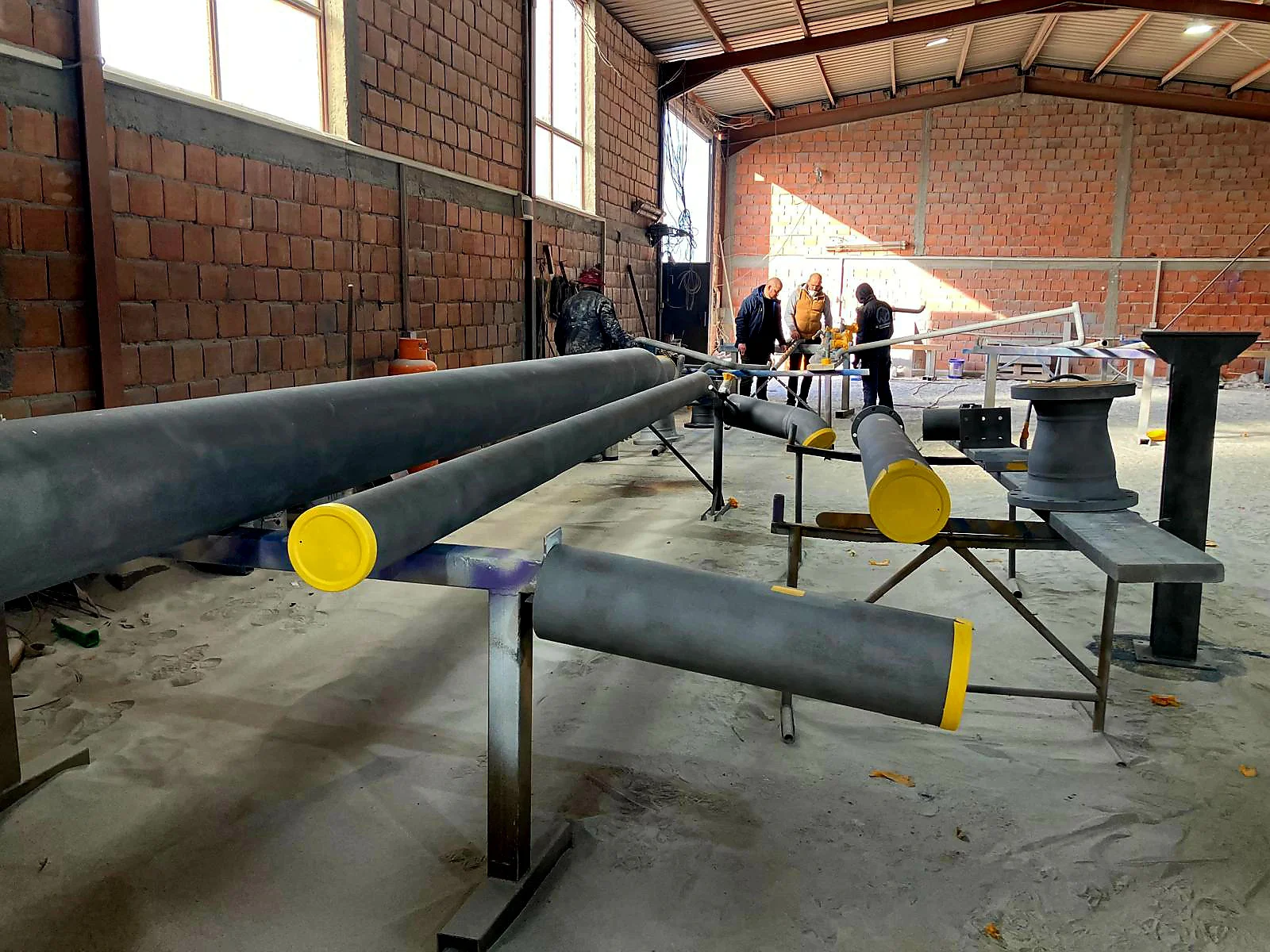
Our Approach: Formal Cleanliness Report
Every pipeline fabrication project for high-pressure systems concludes with a formal Cleanliness Report, which includes:
• Scope / Definition: Clearly defines which sections of the turbine pipeline and which line packages are included in the cleanliness verification.
• Cleaning Procedure: Internal cleaning of high-pressure pipelines using compressed air at 9 bar, removing dust, particles, scale and foreign materials from the pipe walls.
• Inspection & Acceptance Criteria: Visual and functional checks according to cleanliness specifications (customer or OEM requirements) integrated with non-destructive testing (NDT) where necessary.
• Results: All inspected pipelines must pass the cleanliness test with no visible residues or contaminants above allowed limits.
• Conclusion: Confirms that the high-pressure pipeline meets required quality assurance standards and is ready for safe pipeline commissioning.

Why This Matters
Holding pressure alone does not guarantee operational readiness. Integrating Cleanliness Reports with hydrotesting services, NDT inspections and ISO-certified welding standards ensures the reliability and safety of industrial piping solutions. It reduces downtime, ensures smooth pipeline commissioning and enhances the longevity of equipment.
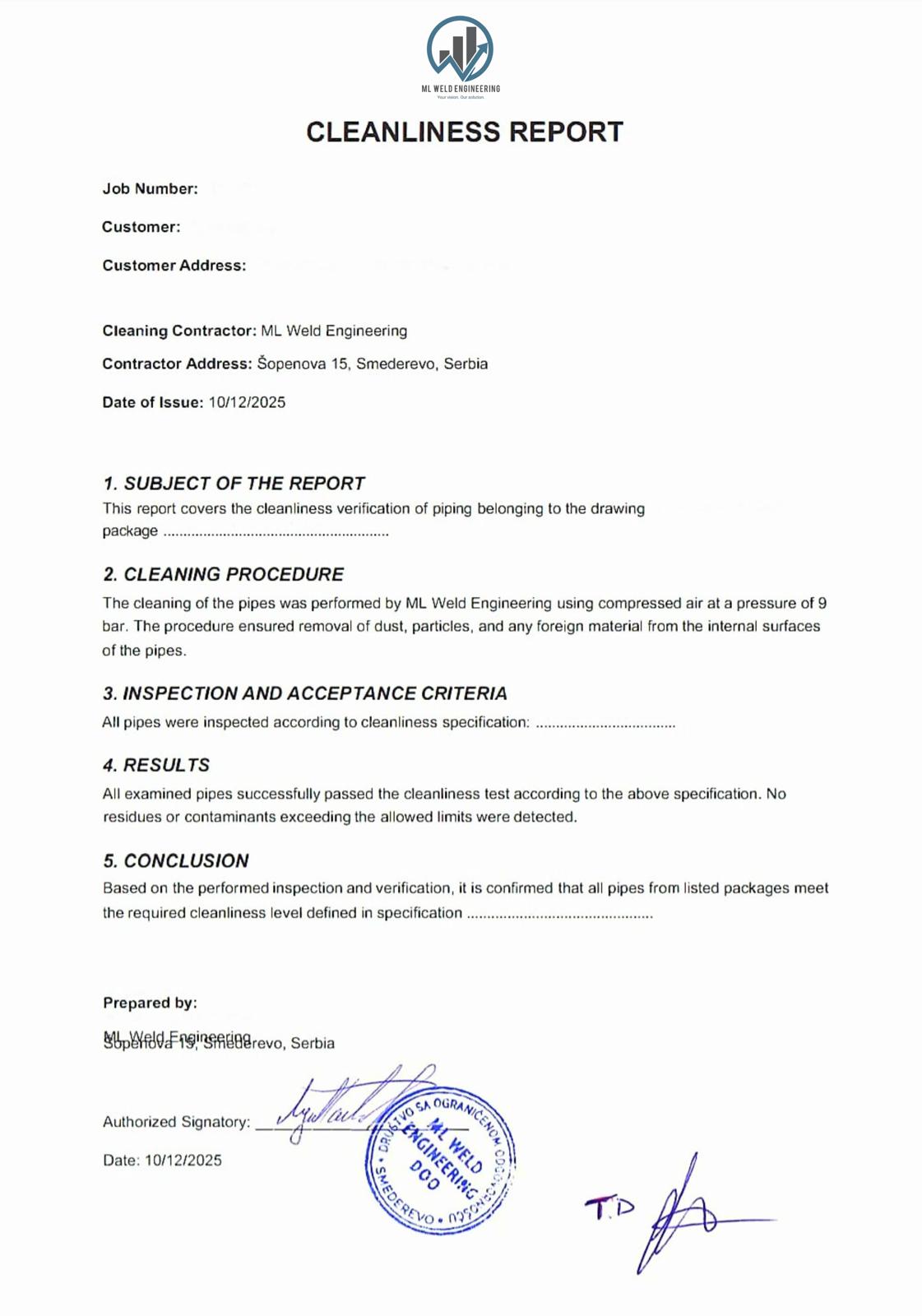
Cleanliness Report
ML Weld Engineering issues formal Cleanliness Reports to confirm that piping systems meet required internal cleanliness standards. Pipes are cleaned using compressed air at controlled pressure to remove dust, particles, and foreign materials from internal surfaces.
All piping is inspected in accordance with project or customer specifications to ensure compliance. The report confirms that the inspected pipes passed cleanliness verification and are suitable for installation and commissioning. Each report is officially signed and stamped, providing reliable quality documentation for project handover